
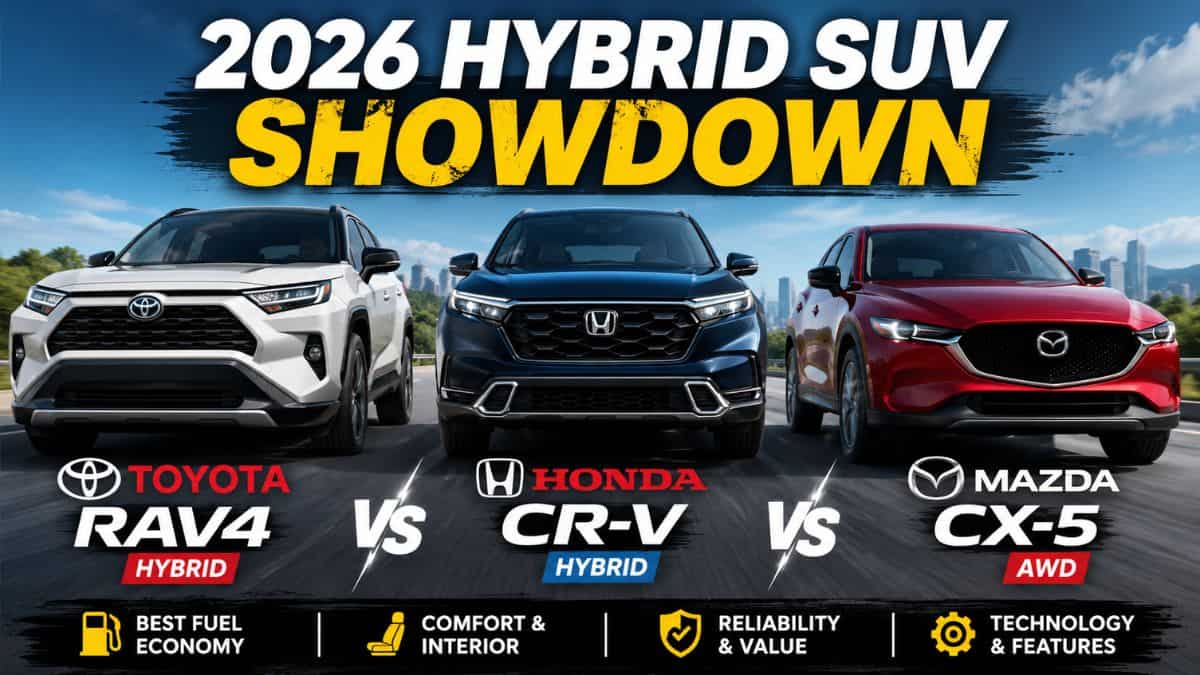

Shopping for a compact SUV in 2026 is not as simple as it used to be.
A few years ago, buyers could easily narrow the list down to one or two obvious choices. But today, the competition between Toyota, Honda, and Mazda has become much tighter – especially now that fuel efficiency, hybrid technology, comfort, and long-term ownership costs matter more than ever for American drivers.
Three SUVs continue dominating the conversation in the U.S. market:
- The redesigned Toyota RAV4 Hybrid
- The reliable Honda CR-V Hybrid
- The updated Mazda CX-5
Each one targets a different type of buyer. Some focus on fuel savings, others focus on comfort, while one leans heavily into premium styling and driving feel.
After looking at real-world driving impressions, expected pricing, interior quality, fuel economy, and overall practicality, here’s how these three SUVs compare heading into 2026.
Mazda CX-5: The Most Premium Feeling Interior
Mazda has always approached the compact SUV market a little differently.
Instead of focusing purely on practicality, the CX-5 has traditionally been built for drivers who want their SUV to feel more refined and upscale without paying luxury-brand prices.
That continues with the latest model.
The 2026 Mazda CX-5 features one of the nicest cabins in its segment, with soft-touch materials, a cleaner dashboard layout, and a more premium atmosphere than many competitors in the same price range.
The infotainment system also feels more modern now, with a larger display and improved responsiveness.
On the road, the CX-5 remains smooth and quiet, although longtime Mazda fans may notice that the newer generation feels slightly less sporty than older versions. Mazda appears to be prioritizing ride comfort more than aggressive handling this time around.
The biggest weakness, however, is fuel economy.
Unlike both Toyota and Honda, the CX-5 still lacks a strong hybrid option in many markets. At a time when many Americans are paying closer attention to gas prices and long-term ownership costs, that could become a deciding factor for many buyers.
Estimated Starting Price
- Around $31,000 to $38,000
Estimated Fuel Economy
- Roughly 26 MPG combined
Best For
Drivers who care more about interior quality, comfort, and premium design than maximum fuel efficiency.
Honda CR-V Hybrid: Comfortable, Practical, and Family Friendly
The Honda CR-V Hybrid continues doing exactly what it has always done well: making everyday driving easy.
Honda’s strength has never been flashy styling or aggressive performance. Instead, the CR-V succeeds because it feels practical, comfortable, and dependable in almost every situation.
For families, this SUV checks a lot of important boxes.
Rear-seat space is generous, visibility is excellent, and the cargo area remains one of the most usable in the segment. Parents will especially appreciate the wide-opening rear doors when installing child seats or loading large bags during road trips.
The hybrid powertrain also performs smoothly in everyday driving. It may not feel exciting, but it delivers strong fuel economy while keeping the cabin quiet and comfortable.
On rough roads and highways, the CR-V Hybrid feels composed and easy to live with, which is one reason it remains such a popular choice in the American market.
Estimated Starting Price
- Around $35,000 to $41,000
Estimated Fuel Economy
- Around 37 to 40 MPG combined
Best For
Families and commuters who prioritize comfort, interior space, reliability, and low-stress daily driving.
Toyota RAV4 Hybrid: The Most Balanced Overall Package
Toyota made major improvements to the RAV4 Hybrid for 2026, and the updates are noticeable almost immediately.
The new model combines fuel efficiency, modern technology, practical storage, and strong resale value better than almost anything else in this category.
Toyota’s hybrid system continues to be one of the most trusted in the automotive industry, and that reputation matters to buyers thinking long term.
Fuel economy is one of the biggest highlights here.
The RAV4 Hybrid delivers excellent efficiency for an all-wheel-drive compact SUV, making it especially appealing for drivers dealing with rising fuel costs.
Inside, the cabin now feels more modern than before, thanks to larger digital displays, improved infotainment software, and smarter storage solutions throughout the interior.
It may not feel as upscale as the Mazda CX-5, but the RAV4 Hybrid arguably delivers the best overall balance between practicality, efficiency, reliability, and technology.
Estimated Starting Price
- Around $34,000 to $42,000
Estimated Fuel Economy
- Approximately 42 to 44 MPG combined
Best For
Drivers looking for strong fuel economy, long-term reliability, modern tech, and overall value.
The Bottom Line: Which SUV Wins?
The truth is that all three of these SUVs are good at very different things.
The Mazda CX-5 stands out with its premium-looking interior and refined cabin feel. The Honda CR-V Hybrid remains one of the most comfortable and family-friendly compact SUVs on the road. Meanwhile, the Toyota RAV4 Hybrid delivers what many buyers now care about most: excellent fuel economy, practical technology, and strong long-term value.
For buyers focused heavily on efficiency and ownership costs, the RAV4 Hybrid probably makes the strongest overall case in 2026.
But if interior comfort or family practicality matters more to you than fuel savings alone, the CR-V Hybrid and CX-5 still remain excellent alternatives depending on your priorities.
At the end of the day, the “best” SUV depends less on internet rankings and more on how you actually plan to use it in everyday life.
This article is inspired by automotive testing, reviews, and comparison discussions shared by the Edmunds Cars YouTube channel regarding the latest compact SUV lineup.