
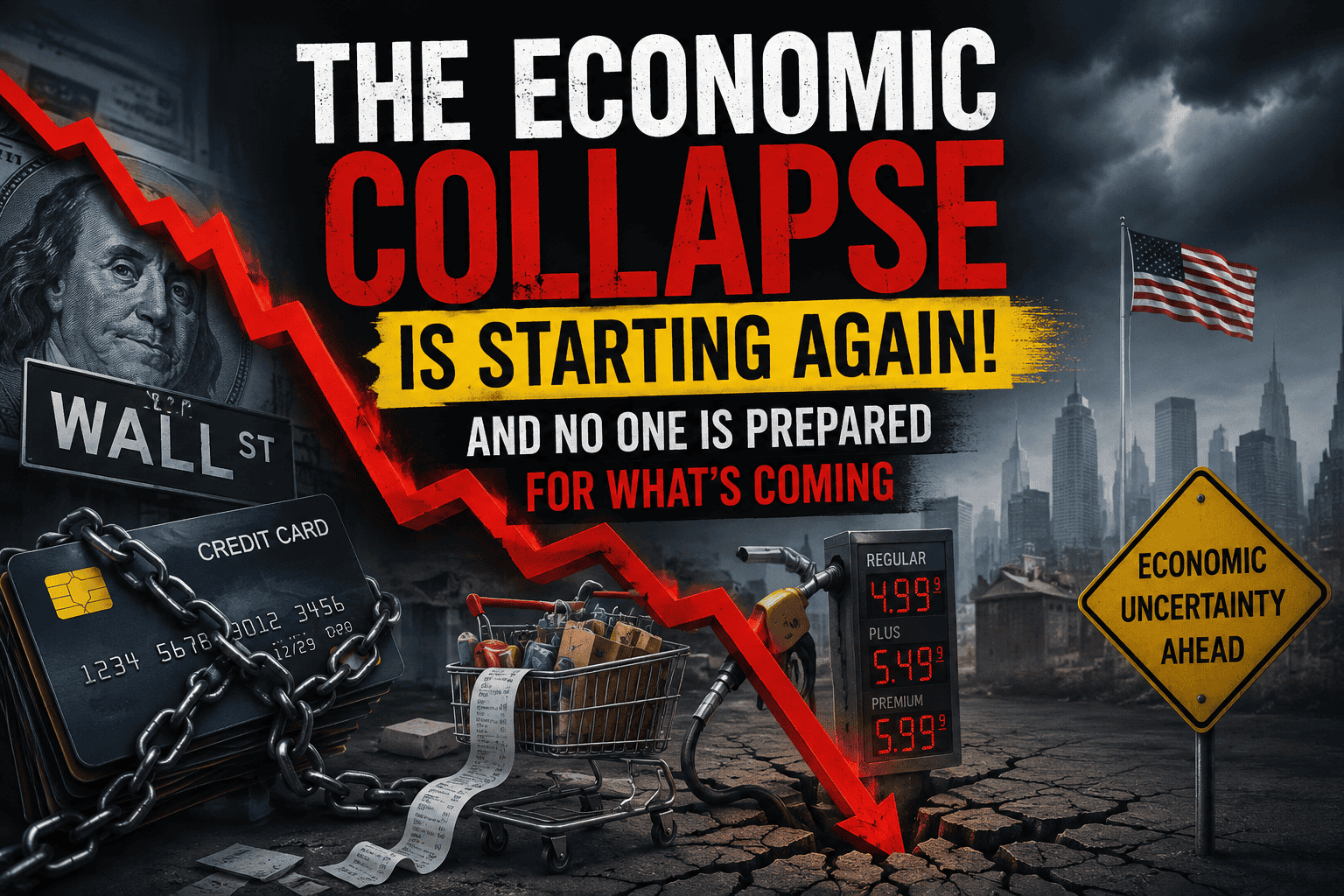

Over the last few years, many Americans have started asking the same uncomfortable question:
Why does the economy feel unstable even when headlines say everything is fine?
Stock markets continue to move, unemployment numbers appear manageable, and politicians keep talking about recovery. But for millions of ordinary people, daily life feels more expensive and financially stressful than ever before.
Groceries cost more. Rent keeps rising. Credit card balances are growing. And many families are finding it harder to save money despite working full-time jobs.
This has led to growing concerns among economists, investors, and financial analysts that the global economy may be entering another dangerous cycle — one that could seriously affect middle-class households over the next few years.
So, is another economic collapse actually coming?
While nobody can predict the future with certainty, there are several warning signs that Americans should not ignore.
1. Inflation Is Still Hurting Everyday Americans
One of the biggest financial problems people continue to face is inflation.
Even though inflation rates have slowed compared to previous peaks, prices remain significantly higher than they were just a few years ago. Housing, insurance, healthcare, groceries, and utility bills have all become more expensive across the United States.
The biggest issue is that wages have not increased at the same pace for many workers.
As a result, many families feel like they are earning money faster on paper but falling behind in real life.
For people relying only on traditional savings accounts, inflation quietly reduces purchasing power over time.
2. Americans Are Relying More on Debt
Another major concern is the rapid rise in consumer debt.
Across the U.S., credit card balances, personal loans, and auto loan debt have reached extremely high levels. Many households are using borrowed money simply to maintain their normal lifestyle.
This becomes dangerous when interest rates stay high.
Higher borrowing costs make it harder for consumers to pay off debt, especially during periods of layoffs or economic slowdown. If unemployment rises significantly, many borrowers could struggle to keep up with monthly payments.
Historically, large debt bubbles have often created financial instability during economic downturns.
3. The Economy Looks Stronger Than Many People Feel
One reason this situation confuses people is because financial markets and everyday reality do not always match.
Large technology companies continue reporting strong profits, which helps keep stock indexes relatively stable. However, many small businesses and local industries are still struggling with rising costs and weaker consumer spending.
This creates a disconnect between Wall Street and Main Street.
A healthy stock market does not automatically mean the average household is financially secure.
4. Why Financial Preparation Matters More Than Panic
Economic uncertainty does not mean people should panic. However, it does mean financial preparation is becoming increasingly important.
During unstable economic periods, households that manage debt carefully and maintain emergency savings are usually in a stronger position than those heavily dependent on credit.
Financial experts often recommend focusing on a few key areas:
Build Emergency Savings
Having several months of living expenses saved can provide important stability during job loss or unexpected financial hardship.
Reduce High-Interest Debt
Paying down credit card debt and unnecessary loans can help reduce long-term financial pressure.
Diversify Income Sources
Relying on only one source of income may become riskier during uncertain economic conditions.
Focus on Long-Term Financial Discipline
Short-term market trends change constantly, but consistent budgeting, saving, and investing habits usually matter more over time.
Is the U.S. Economy Headed for a Collapse?
The truth is that no one knows exactly how the next few years will unfold.
Some analysts believe the economy will eventually stabilize, while others warn that rising debt levels and long-term inflation could create larger financial problems in the future.
What is clear, however, is that many Americans are already feeling the pressure of higher living costs and financial uncertainty.
Instead of reacting emotionally to fear-based headlines, the smarter approach is to stay informed, improve financial habits, and prepare for economic uncertainty in a practical way.
Final Thoughts
Economic cycles are nothing new. Recessions, inflation periods, and market downturns have happened throughout modern history.
The people who usually navigate these periods most successfully are not necessarily the wealthiest — they are often the most financially prepared.
Whether the economy improves or weakens further, building smarter money habits today can help create more stability for the future.
This article is inspired by ongoing financial discussions and economic case-study reporting from independent financial commentary platforms including Redacted.