
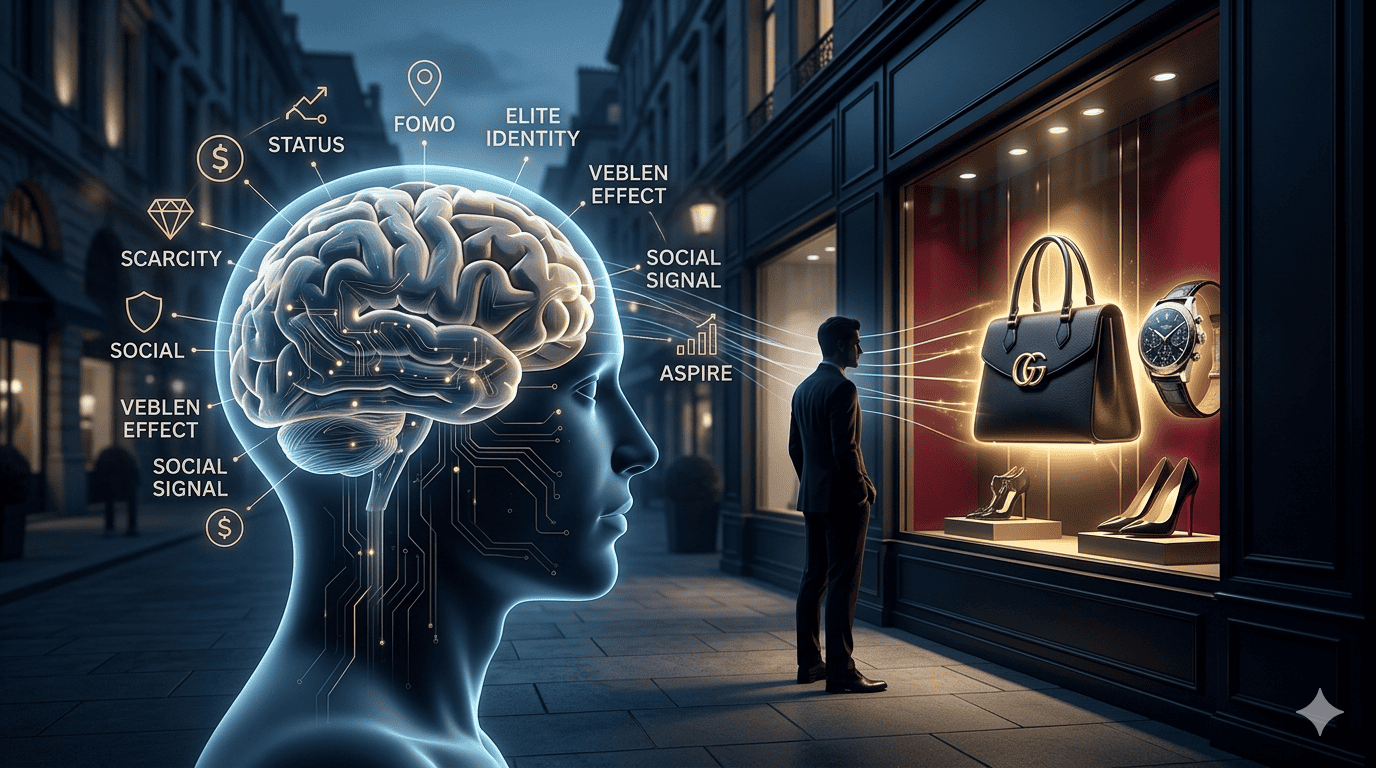

Have you ever wondered why people are willing to spend thousands of dollars on luxury products when cheaper alternatives can often perform the same basic function?
A luxury watch tells time just like an affordable one. A designer handbag carries items no differently than a regular bag. Yet global consumers continue to invest heavily in premium brands every single year.
The reason goes far beyond simple product quality.
Luxury companies understand human psychology extremely well. In many cases, they are not only selling products — they are selling identity, exclusivity, emotion, and social status.
Modern marketing experts frequently explain that people often buy based on feelings rather than logic. Luxury brands have mastered this concept and built entire business empires around it.
Let’s explore some of the key psychological strategies that make luxury products feel so valuable.
1. People Buy Status and Identity
One of the strongest drivers behind luxury spending is social perception.
Humans naturally care about how they are viewed by others. When someone purchases a luxury vehicle, a premium watch, or designer clothing, the product often becomes a symbol of success and personal achievement.
Luxury logos work as social signals. They communicate wealth, confidence, exclusivity, and lifestyle without saying a word.
For many consumers, the emotional meaning behind the brand becomes more important than the practical use of the product itself.
2. Scarcity Creates Desire
Luxury brands intentionally make many of their products difficult to access.
Unlike mass-market companies that focus on maximum availability, premium brands often limit production, create waiting lists, or release exclusive collections in small quantities.
This strategy increases perceived value.
Psychologically, people tend to desire things that feel rare or difficult to obtain. The harder a product is to access, the more special it appears.
This sense of exclusivity is one of the main reasons luxury brands maintain such strong demand.
3. Why Higher Prices Sometimes Increase Demand
In normal economics, demand usually drops when prices rise. However, luxury products often behave differently.
For many premium brands, the high price itself becomes part of the attraction.
Wealthy consumers may view expensive pricing as proof of exclusivity and status. If a luxury brand suddenly became cheap, some buyers could lose interest because the product would no longer feel rare or elite.
In simple terms, the expensive price helps protect the brand’s prestige.
4. The Power of Celebrity Influence
Luxury companies spend enormous amounts of money working with celebrities, athletes, and public figures.
There is a psychological reason behind this strategy.
When consumers repeatedly see successful or admired individuals wearing certain brands, they subconsciously connect the product with confidence, beauty, success, and influence.
Over time, this creates a powerful emotional association in the consumer’s mind.
As a result, many people begin to feel that buying the same brand allows them to express a similar lifestyle or social identity.
Are Luxury Products Worth It?
The answer depends on the individual buyer.
Some luxury products genuinely offer excellent craftsmanship, premium materials, heritage, and long-term durability. Certain items can even hold or increase their value over time.
However, it is also important to recognize how strongly marketing psychology influences consumer decisions.
Before making expensive purchases, it is always helpful to ask:
“Am I buying this for true value, or mainly for emotional satisfaction and social perception?”
Understanding the psychology behind luxury branding can help consumers make smarter and more conscious financial decisions.
Final Thoughts
Luxury marketing is built on far more than product quality alone. These brands deeply understand human behavior, emotional triggers, and social psychology.
At the end of the day, luxury products are not simply about usefulness — they are about perception, identity, and experience.
And that is exactly why luxury brands continue to dominate global culture and consumer behavior year after year.
This article is inspired by modern marketing concepts discussed by business strategist Sabri Suby.